Types of Warehouses in Uzbekistan and What to Ask About Each
Wholesale depots, logistics complexes, cold stores and customs-controlled sites differ in records and risk. Questions to ask an owner before you store or buy.
Saying "a warehouse in Uzbekistan" does not tell you what awaits you. A wholesale depot in a large market is unlike a modern logistics complex, a cold store or a customs-controlled site. Each type keeps records in its own way, has its own risks and raises its own questions, which are best put to the owner before you store your goods there or buy a business that depends on it. The classification here is simplified, since many sites combine features of more than one type.
Wholesale depots and market storage
These are mostly small, neighbouring stores, owned or rented by several traders, with goods moving between them in small, frequent quantities. Their records may be informal, and some goods are sold before they are recorded.
- Whose are the goods on site: the company's, held in trust, or sold on credit?
- Is there a separate record for each trader, or one shared book?
- Who holds the keys, and who can enter at night?
When counting in this type, it helps to divide the goods by owner first and by item second, and to attach a sheet with the owner's name to each pallet, because the first question here is not "how many?" but "whose?".
Logistics complexes and third-party operators
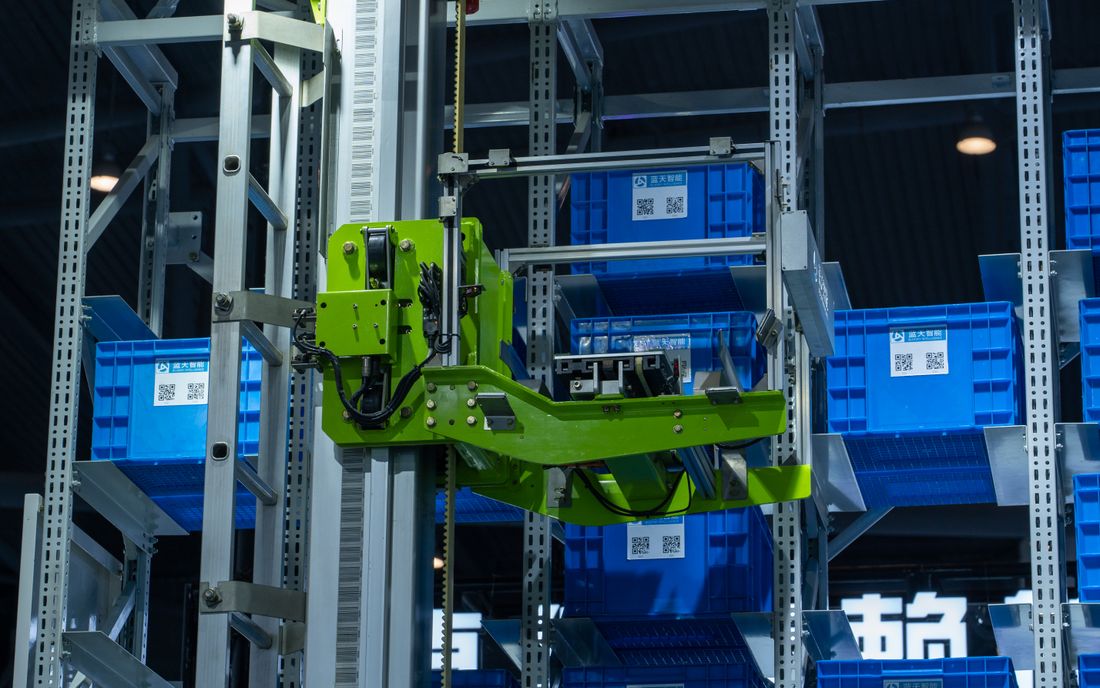
These sites store the goods of many clients, and their records are often kept in electronic software. The questions concern separation between clients, the form and frequency of statements, your right to inspect, insurance, and who actually works on site, including subcontractors. Ask whether your goods sit in a location set aside for them or are mixed with others. It is useful to ask for a sample of the stock statement the operator sends to its clients: a good statement shows code, batch and location, while one that gives only totals offers nothing to compare against.
Three further types
Cold stores and temperature-controlled warehouses
Food and medicines depend on temperature, and a fault can ruin the whole stock. Ask about the daily temperature log, a standby generator for power cuts, the real capacity against the load, and expiry dates and the order of release so that the oldest goes first. Ask to see the certification documents that relate to the site, and ask a specialist what they mean. A common mistake is to accept a count inside a cold room without recording the temperature at the time of the count.
Customs-controlled sites
When goods have arrived but are not yet cleared, they fall under special rules that decide who may enter and what may be touched. Those rules, the names of the regime and its procedures are a matter for your customs broker, with no room for guesswork. The point to know is that a count there needs prior arrangement with the site operator, and that goods are not opened or moved without permission.
Producers' and distributors' own warehouses
Many factories and distribution companies run their own stores, whose records are tied to production and sales. You may find raw materials, finished goods and work in progress in the same place. Ask how each is separated in the records, how scrap is recorded, and what counts as stock and what as work in progress.
A worked example (conditional figures)
You are considering buying a wholesale business whose books show stock worth 300,000 dollars in a warehouse in a large market. The count on site finds goods worth 300,000 dollars there, but 120,000 dollars of them belong to two other traders who keep goods with the company in trust, so they are not part of your deal. The stock the company owns is only 180,000 dollars. The first figure was correct as a count and wrong as to ownership.
Questions common to every type
- Who owns the building or the land, and how long does the lease have to run?
- When was the last count, who performed it, and what did it find?
- How is access controlled, and what fire and surveillance systems exist?
- What insurance is in place, and what does it cover?
- Who signs for receiving and dispatch?
- Is there a plan of the warehouse showing locations, aisles and exits?
In short
Choose your questions to suit the type of warehouse, then check the answers on the ground. WarehouseDepo chooses its counting method to suit the type of goods and the way they are stored: it counts in wholesale depots, logistics complexes, cold stores and others, sets what it finds against the site's records and documents it with photographs.